- 4 Sections
- 13 Lessons
- 20 Hours
Expand all sectionsCollapse all sections
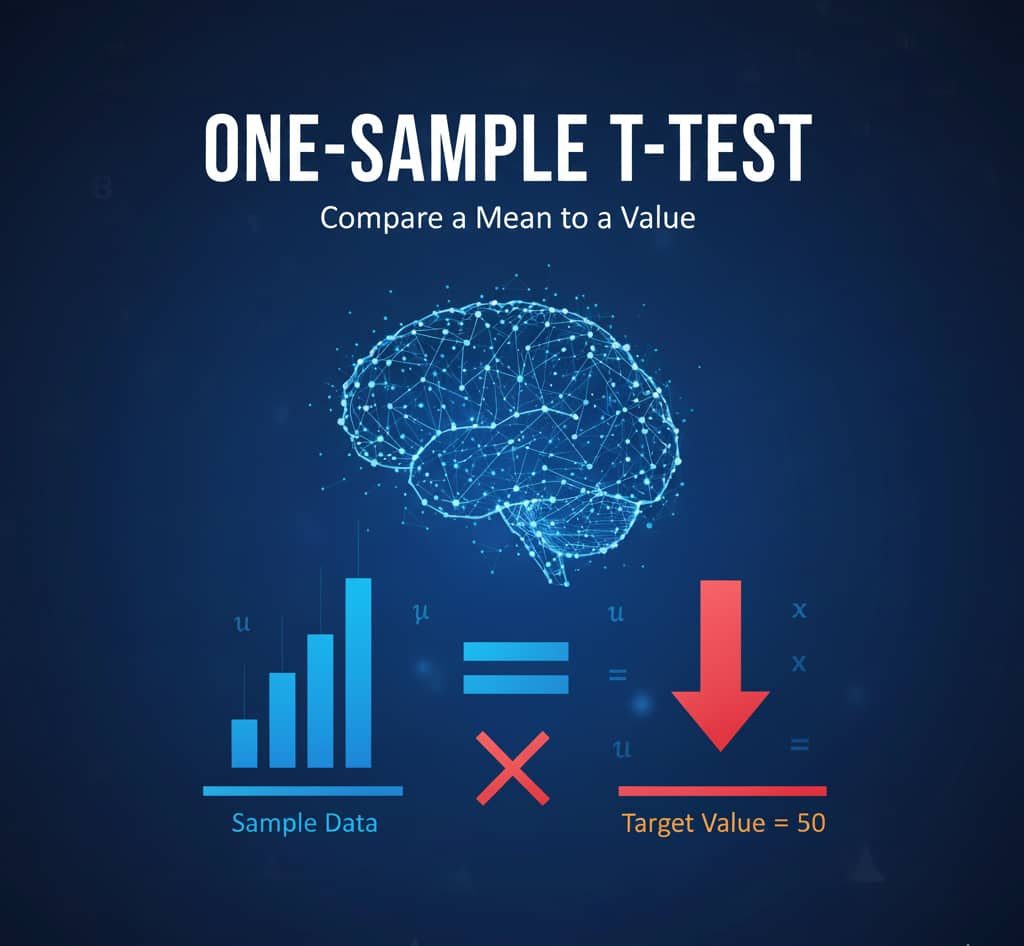
- Module 1: Conceptual Applications and HypothesesThis module introduces the conceptual foundation of the one-sample t-test, focusing on when and why the test is used. Learners explore real-world applications and develop skills in constructing appropriate null and alternative hypotheses for research and professional decision-making. By the end of this module, learners will be able to: (a) explain the purpose and application of the one-sample t-test. (b) identify scenarios where the test is appropriate, (c) formulate null and alternative hypotheses correctly, (d) distinguish between one-tailed and two-tailed tests, and (e) explain the role of significance level in hypothesis testing.5
- Module 2: Assumptions TestingThis module focuses on the assumptions underlying the one-sample t-test and methods for evaluating whether data meet these conditions. Learners also examine options available when assumptions are violated. By the end of this module, learners will be able to: (a) identify key assumptions required for the one-sample t-test, (b) assess data suitability for hypothesis testing, and (c) Apply graphical and statistical methods to test normality,4
- Module 3: Conducting and Interpretation of TestThis module provides hands-on guidance for conducting the one-sample t-test using statistical software and interpreting output results. Learners develop competence in making statistical decisions and translating results into practical conclusions. By the end of this module, learners will be able to: (a) conduct a one-sample t-test using statistical software, (b) interpret test statistics, p-values, and confidence intervals, (c) make appropriate decisions regarding hypotheses, (d) distinguish between statistical and practical significance, and (e) nterpret effect size measures to evaluate impact.4
- Module 4: Communicating Findings in APA FormatThis module equips learners with skills for communicating statistical findings clearly and professionally using APA reporting guidelines. Emphasis is placed on writing result statements and presenting results for academic and professional audiences. Learning Objectives By the end of this module, learners will be able to: 1. Report one-sample t-test results following APA style. 2. Write clear statistical result statements. 3. Present results using tables and figures appropriately. 4. Avoid common reporting and interpretation errors. 5. Communicate findings effectively to both technical and non-technical audiences.4

Requirements
- access to a personal computer or a similar device with internet connectivity.
- knowledge and skills in operating a personal computer or a similar device.
- light experience in creating SPSS datasets
- strong desire to work quicker, smarter and safer in research data analysis.
- payment of the subscription fee
Features
- The online data analysis is self-paced to allow you greater flexibility in scheduling the lessons at your own convenience and speed.
- The course elements are primarily texts and are supported by appealing images, videos, animations, and info graphics.
- The course contents are responsive and work efficiently on mobile phones. Use your laptop/PC for exercises, and smartphones for course instructions and related interactions.
- The online course provides contact form (email), online chat (whatsapp), comments/discussion as interactive interface for you to connect and engage with your instructor and fellow learners.
- The seat hour for each lesson is approximately 90 minutes duration where the course related activities are primarily reading, studying, hands on, quizzes, exercises and/or project works.
Target audiences
- Faculty members
- Research scholars
- Students - undergraduate and postgraduate
- Decision makers